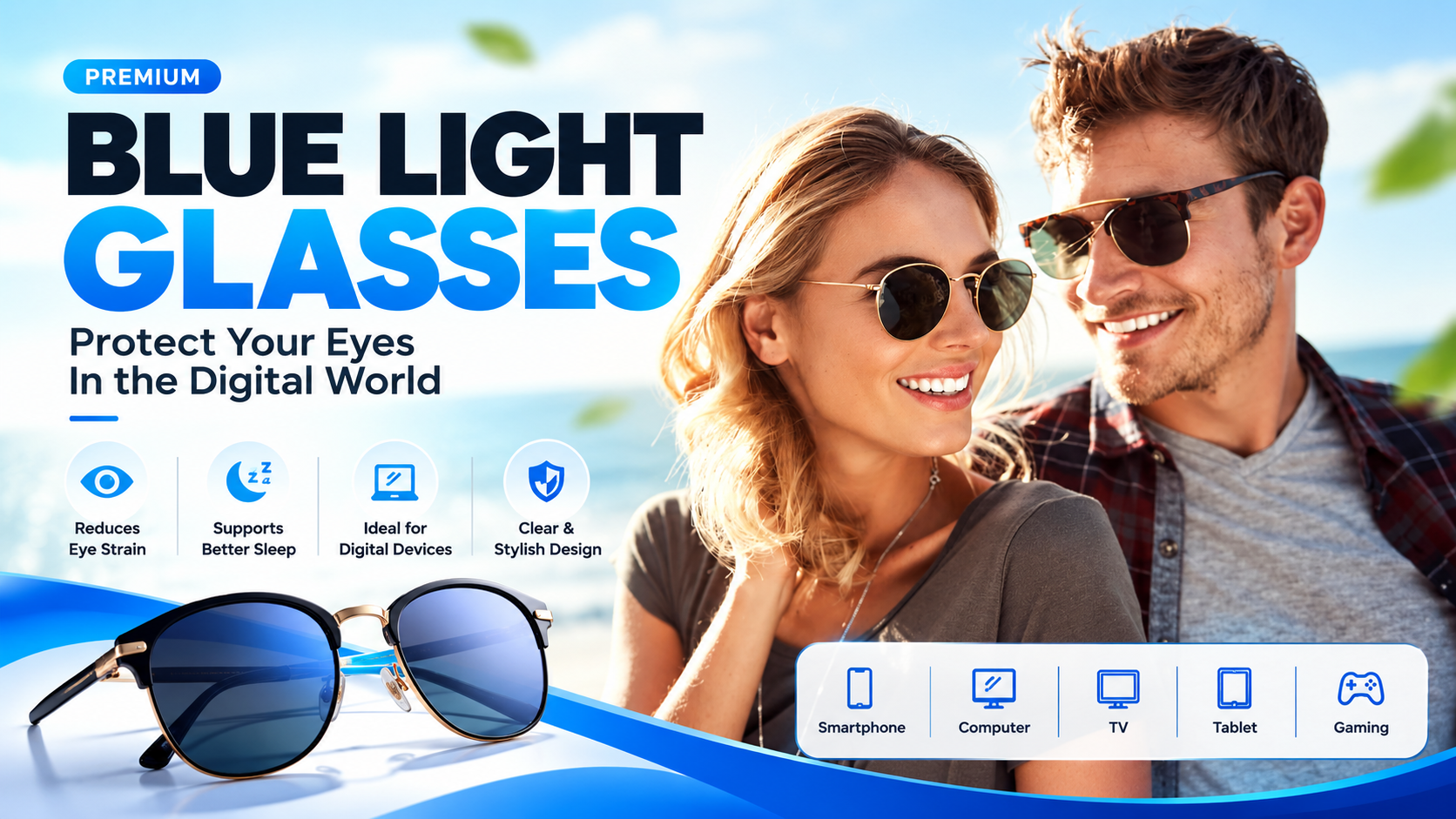
Blue light glasses are a special type of eyewear designed to help protect the eyes from blue light emitted by digital screens such as smartphones, computers, televisions, and tablets. The blue light spectrum generally has a wavelength of around 380 to 500 nanometers. However, prolonged exposure to blue light may have certain effects on the eyes and sleep patterns.
As digital devices have become an essential part of our daily lives, we are exposed to screens for longer periods of time. This can lead to digital eye strain, which may cause symptoms such as tired eyes, dryness, blurred vision, headaches, and difficulty focusing. Research suggests that prolonged screen use may contribute to eye discomfort, although the effects of blue-light exposure itself can vary from person to person.
Blue light glasses are designed to reduce the amount of blue light reaching the eyes. They may help make screen use more comfortable for some people, particularly those who spend several hours a day working on computers, smartphones, or other digital devices.
These glasses can be especially useful for people who frequently use digital screens for work, study, gaming, or entertainment. Wearing them while using a computer or smartphone may help reduce feelings of eye fatigue and make prolonged screen use more comfortable.
Another potential benefit is related to nighttime screen use. Exposure to blue light in the evening may affect the body's natural sleep-wake cycle by influencing melatonin production. Using blue-light-filtering glasses before bedtime may help reduce exposure to blue light, although they should not be considered a guaranteed solution for sleep problems.
Blue light glasses are available in different styles and lens types. Some lenses use a special coating or filtering technology to reduce certain wavelengths of blue light, while others may have a noticeable tint. The level of blue-light filtering can vary depending on the product and manufacturer.
It is also important to remember that blue light glasses are not a replacement for good screen habits. Following the 20-20-20 rule, taking regular breaks, adjusting screen brightness, maintaining proper viewing distance, and keeping the screen at a comfortable height can also help reduce digital eye strain.
People who spend many hours every day looking at digital screens may consider using blue-light-filtering glasses as part of a broader approach to eye comfort. However, if you experience persistent eye pain, significant vision changes, or ongoing discomfort, it is recommended to consult an eye-care professional.
In conclusion, blue light glasses can be a useful option for people who spend a significant amount of time using smartphones, computers, tablets, and other digital devices. Choosing a suitable pair and combining it with healthy screen habits may help make everyday digital screen use more comfortable.